Buy bubbletea-shop.eu ?
We are moving the project
bubbletea-shop.eu .
Are you interested in purchasing the domain
bubbletea-shop.eu ?
domain@kv-gmbh.de · 0541-91531010
Buy bubbletea-shop.eu ?
What does stig mean in German?
In German, "stig" does not have a specific meaning on its own. It could be a part of a word or a name, but it does not have a standalone definition in the German language. If you have a specific word or context in mind, I would be happy to help you with its meaning. **
Why are we humans? Why are we us?
As humans, we are the result of millions of years of evolution, shaped by genetic mutations, environmental factors, and natural selection. Our unique combination of physical and cognitive abilities has allowed us to adapt and thrive in various environments. We are us because of our individual experiences, memories, beliefs, and relationships that shape our identity and make us distinct from others. Our consciousness, self-awareness, and capacity for complex emotions also contribute to our sense of being human and understanding our place in the world. **


Similar search terms for Stig-Abell-Why-We
Top-Angebote
Products related to Stig-Abell-Why-We:
-
Stig Abell How Britain Really Works: Understanding the Ideas and Institutions of a Nation - Non Fiction - PaperbackTitle:. How Britain Really Works: Understanding the Ideas and Institutions of a Nation Condition: BRAND NEW. Format: Paperback Overview:. Getting to grips with Great Britain is harder than ever in a world of fast headlines and shifting political alignments. How Britain Really Works offers a clear, accessible guide to the ideas and institutions that shape daily life—from the economy that pays the bills to the NHS that cares for us, from schools and universities to the media that informs public opinion, and beyond. This paperback presents a grounded, non-partisan briefing that explains how policy ideas travel from thinkers to legislation, and how decisions at Westminster, Whitehall, and local government ripple through households. It does not dictate what you should think; instead, it equips you with factual context, historical background, and practical explanations so you can form your own informed views. You’ll discover how public finances fund hospitals and schools, why priorities shift over time, and how security, defence, and civic life fit into a modern nation’s ambitions. For curious readers, students, professionals, and anyone seeking a thoughtful, evidence-based map of Britain today and tomorrow, this book is a reliable companion that turns complexity into understanding. What Makes This Book Stand Out:. This book stands apart by offering a balanced, data-informed exploration of Britain’s core systems without partisan spin. It connects macro trends to real-life experiences, showing how NHS funding decisions influence patient care, how education policy shapes opportunities for young people, and how economic policy interacts with daily living. The author’s tone is steady and respectful, inviting readers to think critically rather than simply react to headlines. By weaving historical context with contemporary challenges, the book reveals the interdependencies between politics, markets, and public services, helping readers grasp why decisions in one area reverberate across the nation. It’s a practical primer for classrooms, policy discussions, and dinner-table conversations alike, designed to empower readers to engage with the national conversation with clarity and confidence. Who This Book Is Perfect For:. This is essential reading for UK residents who want a clear, non-partisan understanding of how Britain works today. It’s ideal for students of politics, economics, or public policy; for graduates entering the workforce or pursuing further study; for teachers building informed curricula; and for anyone considering how Brexit, immigration, and public services intersect with everyday life. International readers seeking a concise, UK-focused briefing will also find it illuminative. Gift buyers looking for a thoughtful, knowledge-forward present will appreciate its relevance, readability, and lasting value as a reference and discussion starter. Key Highlights:. Clear map of Britain’s major institutions and how they connect. Non-partisan,...99,99 £*Shipping: 0,00 £Secure redirect to the provider
-
Matthew Walker & Ada Calhoun Why We Sleep, Why We Can't Sleep - 2 Books Collection Set - Non Fiction - PaperbackTitles in This Set:. Why We Sleep The New Science of Sleep and Dreams. Why We Can't Sleep Women's New Midlife Crisis Condition: BRAND NEW. Format: Paperback Overview:. Two essential nonfiction titles that tackle two crucial aspects of wellbeing—sleep and midlife—this two-book collection pairs Matthew Walker's groundbreaking exploration of sleep with Ada Calhoun's candid examination of women's midlife experiences. Why We Sleep distills twenty years of neuroscience into practical guidance about REM sleep, circadian rhythms, caffeine and alcohol, and how our sleep patterns shift as we age. Walker unpacks why solid, consistent sleep protects memory, mood, and immune function, and why timing light exposure and routine can transform days and nights. Why We Can't Sleep offers a sharp, compassionate lens on the pressures shaping modern life for Generation X women, from escalating housing costs to HR trends, credit card debt, and the toll of divorce. This pairing invites readers to rethink daily habits while validating personal experiences, delivering both measurable science and human relevance. The set is a versatile, highly readable collection that makes a thoughtful gift for health-minded readers, new parents, busy professionals, or anyone curious about how sleep and midlife intersect with happiness, energy, and longevity. What Makes This Collection Special:. Linking brain science with real-world lived experience, this collection stands out in a crowded nonfiction aisle. Walker's clear, rigorous sleep science illuminates why sleep is the bedrock of learning, memory, metabolism, and mood, while Calhoun's investigative voice reveals how midlife pressures uniquely affect women today. The two titles complement each other: one explains how to improve the quality and duration of sleep; the other explains why so many women feel overwhelmed by economic and social forces. The reading journey is engaging, practical, and empowering, offering evidence-based strategies alongside relatable storytelling. It’s an ideal gift for graduates, new parents, professionals juggling deadlines, or anyone seeking both a healthier night’s rest and a clearer understanding of midlife challenges. The authors’ reputations and timely topics add collectable appeal for readers who value depth, usefulness, and inspiration. Books Included in This Collection:. Why We Sleep The New Science of Sleep and Dreams. In Why We Sleep, Walker guides readers through the science of sleep in an engaging, practical voice. The book explains how sleep stages—especially REM sleep—affect memory, learning, and health, and it shows how caffeine, alcohol, and light exposure disrupt our cycles. The paperback edition makes complex neuroscience accessible with clear explanations, memorable analogies, and actionable routines you can start tonight. Perfect for anyone who wants more restful nights, sharper mornings, and a deeper appreciation for this essential biological process. Why We Can't Sleep Women's New...15,99 £*Shipping: 2,99 £Secure redirect to the provider
-
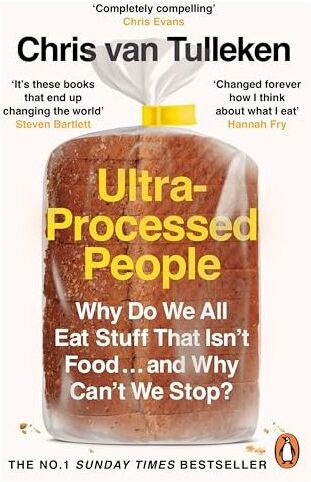
Penguin Ultra-Processed People: Why Do We All Eat Stuff That Isnt Food … and Why Cant We Stop?NOW WITH TWO BONUS CHAPTERS INCLUDING AN FAQTHE NUMBER ONE SUNDAY TIMES BESTSELLERFORTNUM & MASON'S DEBUT FOOD BOOK OF THE YEAR 2024A TIMES AND SUNDAY TIMES SCIENCE BOOK OF THE YEAR 2023AN ECONOMIST, DAILY MAIL, GOOD HOUSEKEEPING and AMAZON BEST BOOK OF THE YEAR 2023SHORTLISTED FOR WATERSTONE'S BOOK OF THE YEAR 2023Chosen by the SUNDAY TIMES, GUARDIAN, FT and DAILY MAIL as one of their BEST SUMMER BOOKS OF 2023'If you only read one diet or nutrition book in your life, make it this one' Bee Wilson'A devastating, witty and scholarly destruction of the shit food we eat and why' Adam Rutherford---An eye-opening investigation into the science, economics, history and production of ultra-processed food. It's not you, it's the food. We have entered a new 'age of eating' where most of our calories come from an entirely novel set of substances called Ultra-Processed Food, food which is industrially processed and designed and marketed to be addictive. But do we really know what it's doing to our bodies?Join Chris in his travels through the world of food science and a UPF diet to discover what's really going on. Find out why exercise and willpower can't save us, and what UPF is really doing to our bodies, our health, our weight, and the planet (hint: nothing good). For too long we've been told we just need to make different choices, when really we're living in a food environment that makes it nigh-on impossible. So this is a book about our rights. The right to know what we eat and what it does to our bodies and the right to good, affordable food. Number 1 Sunday Times bestseller, August 202310,95 £*Shipping: 2,99 £Secure redirect to the provider
-
Why Does E=MC2 and Why Should We Care by Brian CoxDescription. This is an engaging and accessible explanation of Einstein's equation that explores the principles of physics through everyday life. Professor Brian Cox and Professor Jeff Forshaw go on a journey to the frontier of 21st century science to consider the real meaning behind the iconic sequence of symbols that make up Einstein's most famous equation. Breaking down the symbols themselves, they pose a series of questions: What is energy? What is mass? What has the speed of light got to do with energy and mass? In answering these questions, they take us to the site of one of the largest scientific experiments ever conducted. Lying beneath the city of Geneva, straddling the Franco-Swiss boarder, is a 27 km particle accelerator, known as the Large Hadron Collider. Using this gigantic machine - which can recreate conditions in the early Universe fractions of a second after the Big Bang - Cox and Forshaw will describe the current theory behind the origin of mass. Alongside questions of energy and mass, they will consider the third, and perhaps, most intriguing element of the equation: 'c' - or the speed of light. Why is it that the speed of light is the exchange rate? Answering this question is at the heart of the investigation as the authors demonstrate how, in order to truly understand why E=mc2, we first must understand why we must move forward in time and not backwards and how objects in our 3-dimensional world actually move in 4-dimensional space-time. In other words, how the very fabric of our world is constructed. A collaboration between two of the youngest professors in the UK, "Why Does E=MC2?" promises to be one of the most exciting and accessible explanations of the theory of relativity in recent years.. Title. Why Does E=MC2 and Why Should We Care by Brian Cox. Delivery. Content. Reviews11,85 £*Shipping: 2,99 £Secure redirect to the provider



-
Why do we live? Why do we die?
We live to experience and contribute to the world around us, to form connections with others, and to pursue our passions and purpose. We die as a natural part of the life cycle, making way for new generations and allowing the cycle of life to continue. Our mortality also serves as a reminder to live fully and make the most of our time on Earth. **
-
Why don't we know what we feel?
We may not always know what we feel because emotions can be complex and influenced by various factors such as past experiences, societal norms, and unconscious thoughts. Additionally, we may not have the self-awareness or emotional intelligence to accurately identify and label our emotions. Sometimes, we may also suppress or ignore our feelings due to fear of vulnerability or discomfort. It can be helpful to practice mindfulness and self-reflection to better understand and process our emotions. **
-
Why do we idolize people we admire?
We idolize people we admire because they possess qualities or achievements that we aspire to have ourselves. By looking up to them, we are inspired to work harder, set higher goals, and strive for success. Idolizing someone can also provide a sense of motivation, guidance, and direction in our own lives. Ultimately, idolizing those we admire allows us to learn from their experiences and strive to become the best version of ourselves. **
-
Why don't we move when we dream?
When we dream, our brain enters a state of paralysis known as REM atonia, which prevents us from physically acting out our dreams. This paralysis is a protective mechanism that keeps us from potentially harming ourselves or others while we are asleep. It allows us to experience vivid and sometimes intense dreams without physically acting them out. This paralysis is a normal part of the sleep cycle and is essential for restorative sleep. **


Why do we tremble when we smile?
We tremble when we smile because the muscles involved in smiling are connected to the muscles in our cheeks and around our eyes, causing a slight tremor. This tremor is a natural response of the muscles as they contract and relax to form a smile. Additionally, the excitement or happiness that often accompanies a smile can also cause a slight trembling or shaking in the body. Overall, trembling when we smile is a normal and natural physiological response. **
Why do we tremble when we remember?
We tremble when we remember because our bodies can react physically to emotional or psychological stress. When we recall a particularly intense or traumatic memory, our bodies may respond with a fight-or-flight reaction, causing trembling, increased heart rate, and other physical symptoms. This is a natural response to the emotional impact of the memory, as our bodies try to cope with the stress and arousal associated with the recollection. **
Top-Angebote
Products related to Stig-Abell-Why-We:
-
Stig Abell Why We Get The Wrong Politicians, How Britain Really Works 2 Books Collection Set - Non Fiction - PaperbackTitles in This Set:. Why We Get the Wrong Politicians. How Britain Really Works Condition: BRAND NEW. Format: Paperback Overview:. Why We Get the Wrong Politicians, from award-winning journalist Isabel Hardman, dives into Westminster’s inner workings to uncover why citizens sometimes lose faith in representatives even as many politicians strive to do their best in a demanding system. In parallel, How Britain Really Works, from seasoned journalist Stig Abell, offers a clear map of Britain’s key institutions—the economy, the military, healthcare, education, the media—and explains how policy emerges, why reforms often hit unanticipated snags, and what that means for taxpayers and voters. Together, this two-book collection presents a balanced, accessible examination of political life in modern Britain. It invites readers to form informed opinions rather than partisan loyalties, making sense of complicated debates such as Brexit, public spending, and social policy. A timely, thoughtful duo—perfect for curious readers, students, and anyone seeking a clearer picture of how their country actually operates. What Makes This Collection Special:. Two distinct voices illuminate British life from different angles: Hardman’s investigative, Westminster-grounded analysis and Abell’s institutional, macro-level overview. The pairing offers a comprehensive reading journey—from the day-to-day realities of politics to the broader machinery that shapes public services and everyday life. The set is ideal for readers who want context before forming opinions, and for those who enjoy non-fiction that informs without preaching. It also makes a compelling gift for students, book clubs, or policy-minded households, delivering ongoing value as a reference point for current events. With consistent paperback format and a cohesive UK focus, the collection encourages binge reading and long-term shelf appeal for collectors and thought-leaders alike. Books Included in This Collection:. Why We Get the Wrong Politicians. Why We Get the Wrong Politicians examines how Westminster’s pressures shape performance, accountability, and public trust. Hardman blends sharp interviews, on-the-ground reporting, and clear analysis to reveal why voters become disenchanted even when many politicians are trying to navigate a chaotic, high-stakes environment. The book asks what governance should look like in a healthy democracy and how citizens can rebuild faith through informed participation and smarter public discourse. How Britain Really Works. How Britain Really Works is a practical, readable guide to the institutions that keep the country running—the economy, the military, schools, hospitals, the legal system, the media, and more. Abell explains how decisions are made, where incentives meet constraints, and why public policy often evolves in surprising ways. It’s a blueprint for readers who want to understand the machinery behind headlines, without prescribing political opinions. Who This Set Is...15,49 £*Shipping: 2,99 £Secure redirect to the provider
-
HARPERCOLLINS Lifespan: Why We Age and Why We Dont Have ToLifespan - Why We Age and Why We Dont Have To Description In this paradigm-shifting book from acclaimed Harvard Medical School doctor and one of TIME magazine's 100 most influential people on earth; Dr. David Sinclair reveals that everything we think we know about ageing is wrong; and shares the surprising; scientifically-proven methods that can help readers live younger; longer. For decades; the medical community has looked to a variety of reasons for why we age; and the consensus is that no one dies of old age; they die of age-related diseases. That's because ageing is not a disease - it is inevitable. But what if everything you think you know about ageing is wrong?What if ageing is a disease? And that disease is curable. In LIFESPAN; Dr. David Sinclair; one of the world's foremost authorities on genetics and ageing; argues just that. He has dedicated his life's work to chasing more than a longer lifespan - he wants to enable people to live longer; healthier; and disease-free well into our hundreds. In this book; he reveals a bold new theory of ageing; one that pinpoints a root cause of ageing that lies in an ancient genetic survival circuit. This genetic trick - a circuit designed to halt reproduction in order to repair damage to the genome -has enabled earth's early microcosms to survive and evolve into more advanced organisms. But this same survival circuit is the reason we age: as genetic damage accumulates over our lifespans from UV rays; environmental toxins; and unhealthy diets; our genome is overwhelmed; causing gray hair; wrinkles; achy joints; heart issues; dementia; and; ultimately; death. But genes aren't our destiny; we have more control over them than we've been taught to believe. We can't change our DNA; but we can harness the power of the epigenome to realise the true potential of our genes. Drawing on his cutting-edge findings at the forefront of medical research; Dr. Sinclair will provide a scientifically-proven roadmap to reverse the genetic clock by activating our vitality genes; so we can live younger longer. Readers will discover how a few simple lifestyle changes - like intermittent fasting; avoiding too much animal protein; limiting sugar; avoiding x-rays; exercising with the right intensity; and even trying cold therapy - can activate our vitality genes. Dr. Sinclair ends the book with a look to the near future; exploring what the world might look like - and what will need to change - when we are all living well to 120 or more. Dr. Sinclair takes what we have long accepted as the limits of human potential and mortality and turns them into choices. THE EVOLUTION OF AGEING is destined to be the biggest book on genes; biology; and longevity of this decade.7,95 £*Shipping: 2,99 £Secure redirect to the provider
-
Stig Abell How Britain Really Works: Understanding the Ideas and Institutions of a Nation - Non Fiction - PaperbackTitle:. How Britain Really Works: Understanding the Ideas and Institutions of a Nation Condition: BRAND NEW. Format: Paperback Overview:. Getting to grips with Great Britain is harder than ever in a world of fast headlines and shifting political alignments. How Britain Really Works offers a clear, accessible guide to the ideas and institutions that shape daily life—from the economy that pays the bills to the NHS that cares for us, from schools and universities to the media that informs public opinion, and beyond. This paperback presents a grounded, non-partisan briefing that explains how policy ideas travel from thinkers to legislation, and how decisions at Westminster, Whitehall, and local government ripple through households. It does not dictate what you should think; instead, it equips you with factual context, historical background, and practical explanations so you can form your own informed views. You’ll discover how public finances fund hospitals and schools, why priorities shift over time, and how security, defence, and civic life fit into a modern nation’s ambitions. For curious readers, students, professionals, and anyone seeking a thoughtful, evidence-based map of Britain today and tomorrow, this book is a reliable companion that turns complexity into understanding. What Makes This Book Stand Out:. This book stands apart by offering a balanced, data-informed exploration of Britain’s core systems without partisan spin. It connects macro trends to real-life experiences, showing how NHS funding decisions influence patient care, how education policy shapes opportunities for young people, and how economic policy interacts with daily living. The author’s tone is steady and respectful, inviting readers to think critically rather than simply react to headlines. By weaving historical context with contemporary challenges, the book reveals the interdependencies between politics, markets, and public services, helping readers grasp why decisions in one area reverberate across the nation. It’s a practical primer for classrooms, policy discussions, and dinner-table conversations alike, designed to empower readers to engage with the national conversation with clarity and confidence. Who This Book Is Perfect For:. This is essential reading for UK residents who want a clear, non-partisan understanding of how Britain works today. It’s ideal for students of politics, economics, or public policy; for graduates entering the workforce or pursuing further study; for teachers building informed curricula; and for anyone considering how Brexit, immigration, and public services intersect with everyday life. International readers seeking a concise, UK-focused briefing will also find it illuminative. Gift buyers looking for a thoughtful, knowledge-forward present will appreciate its relevance, readability, and lasting value as a reference and discussion starter. Key Highlights:. Clear map of Britain’s major institutions and how they connect. Non-partisan,...99,99 £*Shipping: 0,00 £Secure redirect to the provider
-
Matthew Walker & Ada Calhoun Why We Sleep, Why We Can't Sleep - 2 Books Collection Set - Non Fiction - PaperbackTitles in This Set:. Why We Sleep The New Science of Sleep and Dreams. Why We Can't Sleep Women's New Midlife Crisis Condition: BRAND NEW. Format: Paperback Overview:. Two essential nonfiction titles that tackle two crucial aspects of wellbeing—sleep and midlife—this two-book collection pairs Matthew Walker's groundbreaking exploration of sleep with Ada Calhoun's candid examination of women's midlife experiences. Why We Sleep distills twenty years of neuroscience into practical guidance about REM sleep, circadian rhythms, caffeine and alcohol, and how our sleep patterns shift as we age. Walker unpacks why solid, consistent sleep protects memory, mood, and immune function, and why timing light exposure and routine can transform days and nights. Why We Can't Sleep offers a sharp, compassionate lens on the pressures shaping modern life for Generation X women, from escalating housing costs to HR trends, credit card debt, and the toll of divorce. This pairing invites readers to rethink daily habits while validating personal experiences, delivering both measurable science and human relevance. The set is a versatile, highly readable collection that makes a thoughtful gift for health-minded readers, new parents, busy professionals, or anyone curious about how sleep and midlife intersect with happiness, energy, and longevity. What Makes This Collection Special:. Linking brain science with real-world lived experience, this collection stands out in a crowded nonfiction aisle. Walker's clear, rigorous sleep science illuminates why sleep is the bedrock of learning, memory, metabolism, and mood, while Calhoun's investigative voice reveals how midlife pressures uniquely affect women today. The two titles complement each other: one explains how to improve the quality and duration of sleep; the other explains why so many women feel overwhelmed by economic and social forces. The reading journey is engaging, practical, and empowering, offering evidence-based strategies alongside relatable storytelling. It’s an ideal gift for graduates, new parents, professionals juggling deadlines, or anyone seeking both a healthier night’s rest and a clearer understanding of midlife challenges. The authors’ reputations and timely topics add collectable appeal for readers who value depth, usefulness, and inspiration. Books Included in This Collection:. Why We Sleep The New Science of Sleep and Dreams. In Why We Sleep, Walker guides readers through the science of sleep in an engaging, practical voice. The book explains how sleep stages—especially REM sleep—affect memory, learning, and health, and it shows how caffeine, alcohol, and light exposure disrupt our cycles. The paperback edition makes complex neuroscience accessible with clear explanations, memorable analogies, and actionable routines you can start tonight. Perfect for anyone who wants more restful nights, sharper mornings, and a deeper appreciation for this essential biological process. Why We Can't Sleep Women's New...15,99 £*Shipping: 2,99 £Secure redirect to the provider
-
What does stig mean in German?
In German, "stig" does not have a specific meaning on its own. It could be a part of a word or a name, but it does not have a standalone definition in the German language. If you have a specific word or context in mind, I would be happy to help you with its meaning. **
-
Why are we humans? Why are we us?
As humans, we are the result of millions of years of evolution, shaped by genetic mutations, environmental factors, and natural selection. Our unique combination of physical and cognitive abilities has allowed us to adapt and thrive in various environments. We are us because of our individual experiences, memories, beliefs, and relationships that shape our identity and make us distinct from others. Our consciousness, self-awareness, and capacity for complex emotions also contribute to our sense of being human and understanding our place in the world. **
-
Why do we live? Why do we die?
We live to experience and contribute to the world around us, to form connections with others, and to pursue our passions and purpose. We die as a natural part of the life cycle, making way for new generations and allowing the cycle of life to continue. Our mortality also serves as a reminder to live fully and make the most of our time on Earth. **
-
Why don't we know what we feel?
We may not always know what we feel because emotions can be complex and influenced by various factors such as past experiences, societal norms, and unconscious thoughts. Additionally, we may not have the self-awareness or emotional intelligence to accurately identify and label our emotions. Sometimes, we may also suppress or ignore our feelings due to fear of vulnerability or discomfort. It can be helpful to practice mindfulness and self-reflection to better understand and process our emotions. **
Similar search terms for Stig-Abell-Why-We
-
Penguin Ultra-Processed People: Why Do We All Eat Stuff That Isnt Food … and Why Cant We Stop?NOW WITH TWO BONUS CHAPTERS INCLUDING AN FAQTHE NUMBER ONE SUNDAY TIMES BESTSELLERFORTNUM & MASON'S DEBUT FOOD BOOK OF THE YEAR 2024A TIMES AND SUNDAY TIMES SCIENCE BOOK OF THE YEAR 2023AN ECONOMIST, DAILY MAIL, GOOD HOUSEKEEPING and AMAZON BEST BOOK OF THE YEAR 2023SHORTLISTED FOR WATERSTONE'S BOOK OF THE YEAR 2023Chosen by the SUNDAY TIMES, GUARDIAN, FT and DAILY MAIL as one of their BEST SUMMER BOOKS OF 2023'If you only read one diet or nutrition book in your life, make it this one' Bee Wilson'A devastating, witty and scholarly destruction of the shit food we eat and why' Adam Rutherford---An eye-opening investigation into the science, economics, history and production of ultra-processed food. It's not you, it's the food. We have entered a new 'age of eating' where most of our calories come from an entirely novel set of substances called Ultra-Processed Food, food which is industrially processed and designed and marketed to be addictive. But do we really know what it's doing to our bodies?Join Chris in his travels through the world of food science and a UPF diet to discover what's really going on. Find out why exercise and willpower can't save us, and what UPF is really doing to our bodies, our health, our weight, and the planet (hint: nothing good). For too long we've been told we just need to make different choices, when really we're living in a food environment that makes it nigh-on impossible. So this is a book about our rights. The right to know what we eat and what it does to our bodies and the right to good, affordable food. Number 1 Sunday Times bestseller, August 202310,95 £*Shipping: 2,99 £Secure redirect to the provider
-
Why Does E=MC2 and Why Should We Care by Brian CoxDescription. This is an engaging and accessible explanation of Einstein's equation that explores the principles of physics through everyday life. Professor Brian Cox and Professor Jeff Forshaw go on a journey to the frontier of 21st century science to consider the real meaning behind the iconic sequence of symbols that make up Einstein's most famous equation. Breaking down the symbols themselves, they pose a series of questions: What is energy? What is mass? What has the speed of light got to do with energy and mass? In answering these questions, they take us to the site of one of the largest scientific experiments ever conducted. Lying beneath the city of Geneva, straddling the Franco-Swiss boarder, is a 27 km particle accelerator, known as the Large Hadron Collider. Using this gigantic machine - which can recreate conditions in the early Universe fractions of a second after the Big Bang - Cox and Forshaw will describe the current theory behind the origin of mass. Alongside questions of energy and mass, they will consider the third, and perhaps, most intriguing element of the equation: 'c' - or the speed of light. Why is it that the speed of light is the exchange rate? Answering this question is at the heart of the investigation as the authors demonstrate how, in order to truly understand why E=mc2, we first must understand why we must move forward in time and not backwards and how objects in our 3-dimensional world actually move in 4-dimensional space-time. In other words, how the very fabric of our world is constructed. A collaboration between two of the youngest professors in the UK, "Why Does E=MC2?" promises to be one of the most exciting and accessible explanations of the theory of relativity in recent years.. Title. Why Does E=MC2 and Why Should We Care by Brian Cox. Delivery. Content. Reviews11,85 £*Shipping: 2,99 £Secure redirect to the provider
-
Dr David A. Sinclair Lifespan: Why We Age – And Why We Don't Have To by Dr. David Sinclair - Non Fiction - PaperbackTitle:. Lifespan: Why We Age – and Why We Don’t Have To Format: Paperback. ISBN: 9780008292355 Overview:. Dr. David Sinclair, a renowned Harvard Medical School geneticist, invites readers to rethink aging. Lifespan presents aging not as an unalterable fate but as a condition that science can understand, influence, and, in many cases, slow down. The book blends rigorous laboratory insight with vivid storytelling, taking you on a journey through biology, history, and practical everyday habits. Sinclair explains concepts like epigenetic aging, NAD+ and sirtuin pathways, and how calories, fasting, exercise, sleep, and stress management can interact with our biology to help us live healthier, longer lives. While some interventions are supported by human data and others by compelling animal studies, the core message is hopeful: by aligning our lifestyles with the science of longevity, we can extend healthspan—the years of life spent in good health. This UK paperback edition distills complex science into accessible, actionable guidance, making advanced longevity concepts approachable for curious readers and those beginning a personal health journey alike. What Makes This Book Stand Out:. Lifespan stands out for its fearless synthesis of cutting-edge longevity science with an engaging, detective-story narrative. Sinclair writes with clarity about intricate topics—epigenetic clocks, the role of NAD+ precursors, and the idea of aging as a disease—then translates them into practical steps you can try today. The book’s rhythm blends personal anecdotes, lab findings, and ethical reflections, creating a compelling reading experience that feels both scientifically grounded and personally relevant. The collaboration with journalist Matthew LaPlante adds a narrative drive that helps readers connect the dots between research, everyday choices, and long-term health outcomes. This combination—rigor, readability, and real-world applicability—helps Lifespan cut through hype and offer a credible, hopeful path forward. Who This Book Is Perfect For:. If you’re curious about why we age and how to influence it, Lifespan is for you. It appeals to health-conscious readers seeking evidence-based lifestyle guidance, science enthusiasts who enjoy accessible explanations of complex biology, students exploring aging research, and anyone curious about longer, healthier lives. It also makes a thoughtful gift for book clubs and family members interested in longevity, biohacking, and humane approaches to aging. Whether you’re new to science or already exploring the longevity space, this paperback provides a robust, readable entry point into the latest thinking on healthspan and lifespan. Key Highlights:. Reframes aging as a treatable biological process backed by science. Clear explanations of NAD+, sirtuins, and epigenetic aging. Practical strategies: time-restricted eating, exercise, sleep, and stress management. Balanced discussion of supplements and therapies explored in longevity...15,99 £*Shipping: 2,99 £Secure redirect to the provider
-
Why We Get the Wrong Politicians by Isabel HardmanDescription. Politicians are consistently voted the least trusted professional group by the UK public. They've recently become embroiled in scandals relating to everything from expenses to sexual harassment to illicit parties. Every year, they introduce new legislation that doesn't do what it sets out to achieve - often with terrible financial and human costs. But, with some notable exceptions, they are decent, hard-working people, doing a hugely difficult and demanding job.. Title. Why We Get the Wrong Politicians. Delivery. Content. Reviews99,99 £*Shipping: 0,00 £Secure redirect to the provider
-
Why do we idolize people we admire?
We idolize people we admire because they possess qualities or achievements that we aspire to have ourselves. By looking up to them, we are inspired to work harder, set higher goals, and strive for success. Idolizing someone can also provide a sense of motivation, guidance, and direction in our own lives. Ultimately, idolizing those we admire allows us to learn from their experiences and strive to become the best version of ourselves. **
-
Why don't we move when we dream?
When we dream, our brain enters a state of paralysis known as REM atonia, which prevents us from physically acting out our dreams. This paralysis is a protective mechanism that keeps us from potentially harming ourselves or others while we are asleep. It allows us to experience vivid and sometimes intense dreams without physically acting them out. This paralysis is a normal part of the sleep cycle and is essential for restorative sleep. **
-
Why do we tremble when we smile?
We tremble when we smile because the muscles involved in smiling are connected to the muscles in our cheeks and around our eyes, causing a slight tremor. This tremor is a natural response of the muscles as they contract and relax to form a smile. Additionally, the excitement or happiness that often accompanies a smile can also cause a slight trembling or shaking in the body. Overall, trembling when we smile is a normal and natural physiological response. **
-
Why do we tremble when we remember?
We tremble when we remember because our bodies can react physically to emotional or psychological stress. When we recall a particularly intense or traumatic memory, our bodies may respond with a fight-or-flight reaction, causing trembling, increased heart rate, and other physical symptoms. This is a natural response to the emotional impact of the memory, as our bodies try to cope with the stress and arousal associated with the recollection. **
* All prices are inclusive of VAT and, if applicable, plus shipping costs. The offer information is based on the details provided by the respective shop and is updated through automated processes. Real-time updates do not occur, so deviations can occur in individual cases. ** Note: Parts of this content were created by AI.